
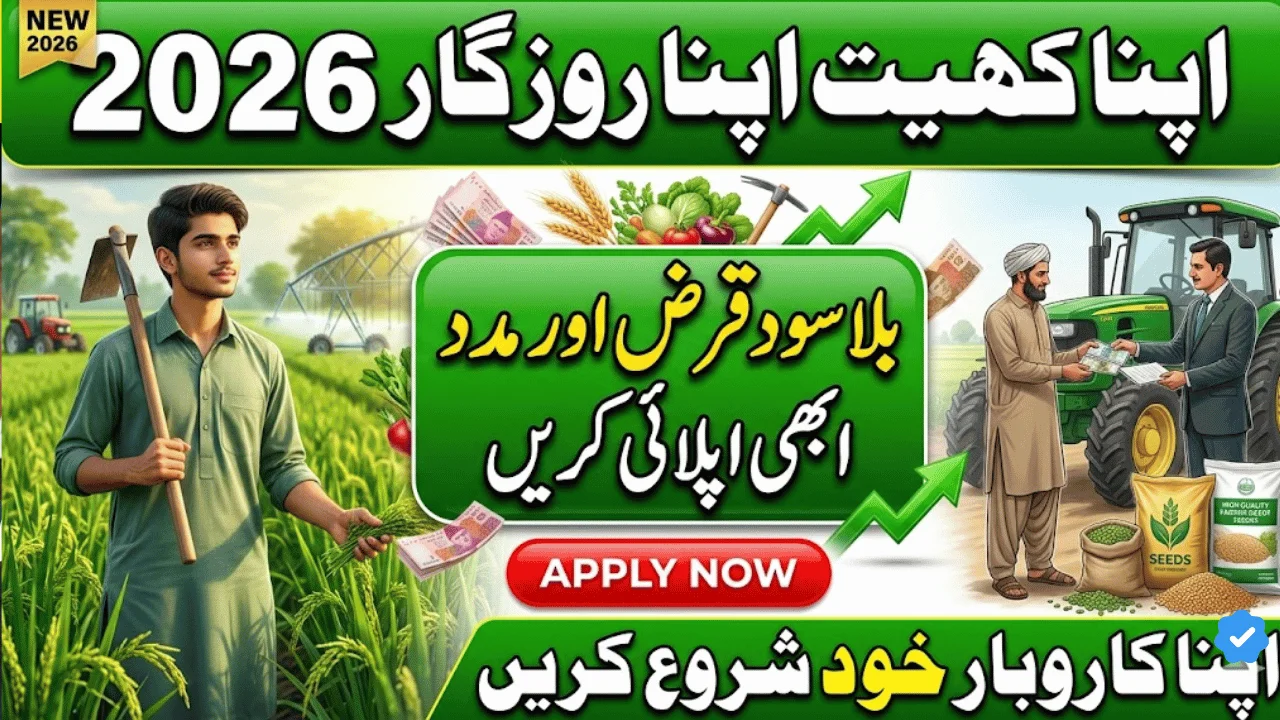
For many young people in Pakistan, especially in rural areas, the biggest challenge isn’t lack of effort—it’s lack of opportunity. Jobs are limited, land is expensive, and starting a business requires capital most families simply don’t have.
This is where the Apna Khet Apna Rozgar Scheme eligibility criteria 2026 becomes important. It’s not just another government program—it’s a pathway for individuals to turn agriculture into a reliable income source. But the real question is: who can actually benefit, and how do you make the most of it?
This guide breaks it down in a practical, no-confusion way.
What Is Apna Khet Apna Rozgar Scheme 2026
At its core, this scheme is designed to help individuals start or expand small-scale farming businesses. Instead of relying on traditional employment, it encourages self-employment through agriculture.
But unlike older schemes, this one focuses on complete support, not just loans.
What Makes It Different
- Combines financial help + training + resources
- Targets youth and low-income individuals
- Encourages modern farming techniques
- Focuses on long-term sustainability, not short-term relief
👉 In simple terms: it’s not just giving money—it’s helping you build a working farm-based income.
Apna Khet Apna Rozgar Scheme Eligibility Criteria 2026
Understanding eligibility is critical because most applications get rejected due to basic mistakes or misunderstandings.
Basic Eligibility Requirements
To qualify, you generally need:
- Pakistani citizenship
- Valid CNIC
- Age between 18 and 45 years
- Unemployed or low-income status
- Interest in agriculture or farming
Who Gets Priority
Even if many people apply, some candidates are more likely to be selected:
- Residents of rural areas
- Agriculture graduates or diploma holders
- Individuals with basic farming experience
- Small landholders or those willing to lease land
Real-World Insight
If two applicants apply:
- One has no experience but wants to try farming
- The other has helped family farming for years
👉 The second applicant has a higher chance—not because of degrees, but practical exposure.
What You Actually Get from the Scheme
Many people assume this scheme is just about loans. That’s only part of the picture.
Financial Support
- Low-interest or interest-free loans
- Flexible repayment plans
- Support for small to medium farming setups
Agricultural Resources
- Subsidized seeds and fertilizers
- Access to machinery like tractors or tools
- Guidance on crop selection
Training and Mentorship
- Workshops on modern farming
- Soil management and irrigation techniques
- Business planning for agriculture
Optional Land Support (Limited Cases)
- Some applicants may get access to land leasing opportunities
Scheme Benefits vs Traditional Farming Struggles
| Aspect | Without Scheme | With Scheme |
|---|---|---|
| Initial Investment | High personal cost | Financial assistance available |
| Farming Knowledge | Trial and error | Expert training provided |
| Equipment Access | Expensive | Subsidized or supported |
| Risk Level | High | Reduced with guidance |
| Income Stability | Uncertain | More structured approach |
👉 This comparison shows why the scheme is especially useful for beginners.
How to Apply for Apna Khet Apna Rozgar Scheme 2026
The application process is simple—but small errors can cause rejection.
Step-by-Step Process
- Visit the official agriculture portal
- Register using your CNIC
- Fill out personal and financial details
- Provide farming-related information
- Upload required documents
- Submit application and wait for verification
Pro Tip
Before submitting:
- Double-check CNIC number
- Ensure documents are clear
- Avoid incomplete fields
Even a small mistake can delay approval.
Required Documents Checklist
Keep these ready before applying:
- CNIC (original and copy)
- Passport-size photos
- Proof of income (if applicable)
- Educational certificates (optional but helpful)
- Residence details
👉 Think of this like a job application—organized documents increase your chances.
Practical Strategy to Get Approved Faster
Most guides don’t tell you this, but selection often depends on how realistic your plan is.
What Improves Your Chances
- Choose a simple farming idea (e.g., vegetables, poultry)
- Show basic understanding of costs and profit
- Mention available land or access to land
- Avoid unrealistic large-scale plans
Example
Instead of saying:
“I want to start a big farming business”
Say:
“I want to start vegetable farming on 2 acres with seasonal crops”
👉 Practical plans always win.
Common Mistakes That Lead to Rejection
Avoid these at all costs:
- Incorrect CNIC details
- Applying without understanding the scheme
- Submitting incomplete forms
- Unrealistic business plans
- Ignoring verification calls or messages
How This Scheme Impacts Real Lives
Let’s take a real scenario:
A young man in a village has no job but owns 2 acres of land.
Without support:
- He can’t afford seeds or fertilizers
- Land remains unused
With this scheme:
- He gets financial help
- Learns modern farming
- Starts earning within one season
👉 That’s the real impact—turning unused potential into income.
FAQs About Apna Khet Apna Rozgar Scheme Eligibility Criteria 2026
Who is eligible for Apna Khet Apna Rozgar Scheme 2026?
Anyone who is a Pakistani citizen, aged 18–45, and either unemployed or from a low-income background can apply.
Is farming experience required?
Not mandatory, but it increases your chances of approval.
Can urban residents apply?
Yes, but rural applicants are usually given preference.
Is the loan completely interest-free?
Some cases may be interest-free, while others have very low interest rates depending on the category.
What happens after applying?
Your application goes through verification, and shortlisted candidates may be contacted for further assessment.