
Most people only check the currency exchange rates in Pakistan today when they need to send money abroad or receive remittances. But in reality, these rates affect almost everything—fuel prices, imported goods, inflation, and even job opportunities.
If the rupee weakens, daily life becomes more expensive. If it stabilizes, businesses and consumers get some relief. Understanding these changes helps you make smarter financial decisions.
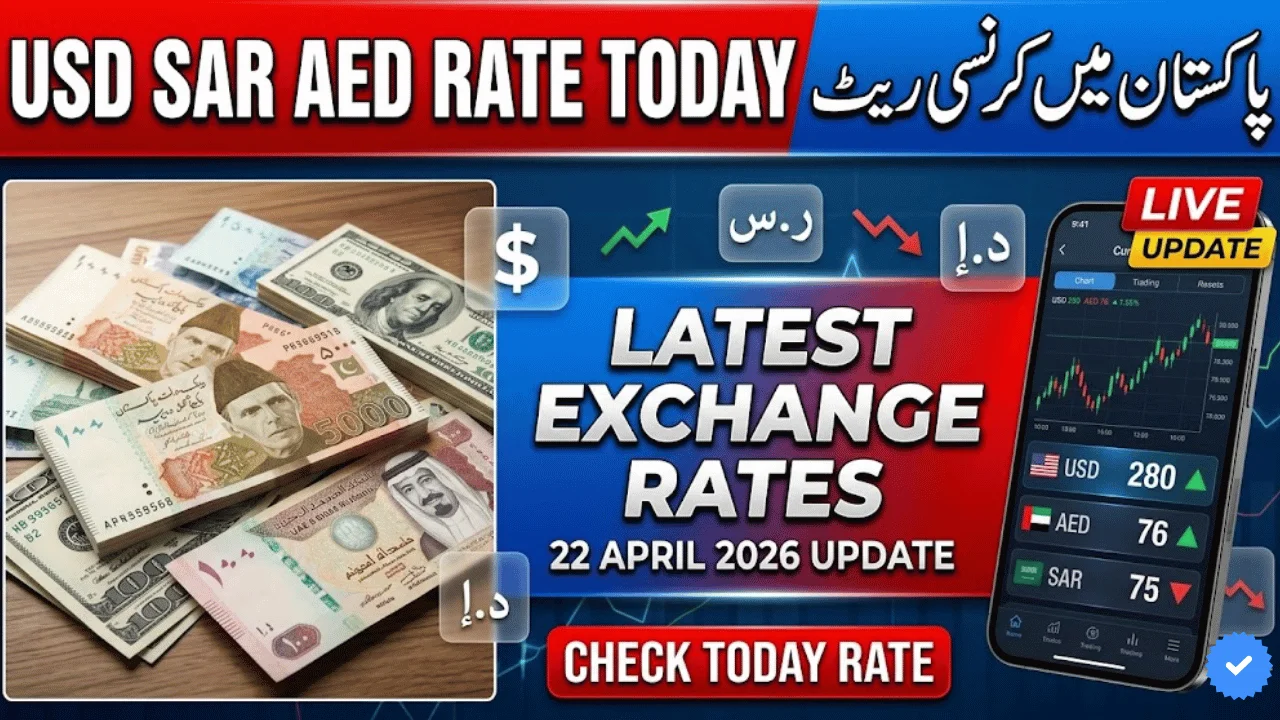
Latest Currency Exchange Rates in Pakistan Today (22 April 2026)
Here’s a clear snapshot of major currencies in the open market:
| Currency | Buying (PKR) | Selling (PKR) |
|---|---|---|
| US Dollar (USD) | 278.95 | 280.10 |
| Euro (EUR) | 327.62 | 332.27 |
| British Pound (GBP) | 376.15 | 383.36 |
| UAE Dirham (AED) | 75.90 | 76.75 |
| Saudi Riyal (SAR) | 74.45 | 75.45 |
Other Notable Rates
- Canadian Dollar: 203.09 / 207.82
- Australian Dollar: 198.20 / 204.50
- Kuwaiti Dinar: 878.75 / 890.25
- Qatari Riyal: 71.53 / 72.75
Important: Rates can vary slightly depending on city and exchange company.
Understanding Buying vs Selling Rate (Simple Explanation)
Many people get confused here.
- Buying Rate: Price at which exchange company buys foreign currency from you
- Selling Rate: Price at which you buy foreign currency
👉 Example:
If you want to buy USD, you’ll pay the higher selling rate.
If you’re selling USD, you’ll receive the lower buying rate.
Why Currency Exchange Rates Change Daily
Exchange rates are not random—they respond to real economic factors.
1. Dollar Demand in Pakistan
Pakistan imports fuel, machinery, and goods in dollars. Higher demand = higher USD rate.
2. Remittances from Overseas Pakistanis
More inflow of foreign currency can strengthen the rupee.
3. Inflation and Economic Stability
High inflation weakens the rupee, increasing exchange rates.
4. Global Market Conditions
Events like oil price changes or geopolitical tensions affect currencies worldwide.
Impact on Daily Life in Pakistan
The currency exchange rates in Pakistan today directly affect:
1. Petrol and Diesel Prices
Since fuel is imported, a stronger dollar means higher fuel prices.
2. Mobile Phones and Electronics
Imported items become more expensive when rupee weakens.
3. Overseas Remittances
Families receiving money from abroad benefit when the dollar rises.
👉 Real example:
If someone sends $1,000 from UAE, the family receives more rupees when AED rate increases.
USD vs SAR vs AED – Which Matters Most?
| Currency | Importance in Pakistan |
|---|---|
| USD | Most critical for imports & economy |
| SAR | Important for Saudi-based workers |
| AED | Key for UAE remittances |
👉 Insight:
While USD drives the economy, SAR and AED directly impact millions of Pakistani families.
Open Market vs Bank Rates – What’s the Difference
| Feature | Open Market | Banks |
|---|---|---|
| Rates | Slightly higher | Lower |
| Accessibility | Easy | Formal process |
| Use Case | Remittances, travel | Business, official transfers |
👉 Most people use exchange companies (open market) for daily transactions.
Practical Tips Before Currency Exchange
If you deal with foreign currency, these tips can save money:
- Always check latest rates before exchange
- Compare rates from multiple dealers
- Avoid exchanging large amounts at once
- Use trusted and licensed exchange companies
👉 Pro tip: Even a Rs. 1 difference per dollar can matter in large transactions.
Recent Trend – Is Rupee Stable or Weak?
In recent days, the rupee has shown minor fluctuations rather than extreme volatility.
This indicates:
- Controlled market conditions
- Balanced demand and supply
- No major economic shock (for now)
However, sudden global or political changes can still impact rates quickly.
Future Outlook – What to Expect
Experts suggest:
- Dollar may remain strong due to import pressure
- Remittance inflow can support rupee stability
- Global oil prices will continue influencing PKR
👉 Short-term stability is possible, but long-term pressure remains.
FAQs – Real Questions People Ask
1. What is the USD rate in Pakistan today?
Around Rs. 278.95 (buying) and Rs. 280.10 (selling), subject to change.
2. Why is the dollar increasing in Pakistan?
Due to high import demand, inflation, and economic factors.
3. Which currency is best for remittances?
USD, AED, and SAR are most commonly used and beneficial.
4. Are exchange rates same in all cities?
No, slight differences exist depending on local demand.
5. Should I exchange currency now or wait?
It depends on market trends—avoid rushing and monitor rates.
Final Takeaway
The currency exchange rates in Pakistan today are more than just numbers—they reflect the country’s economic health. Whether you are a student, traveler, investor, or someone receiving remittances, understanding these rates helps you make better financial decisions.